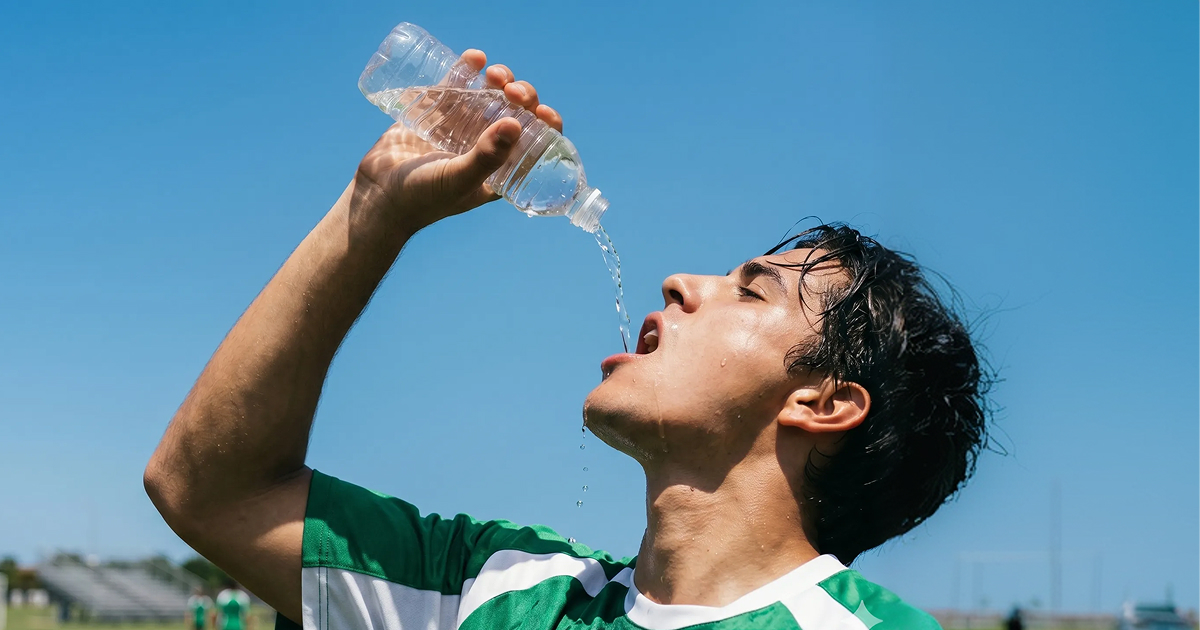
We’ve all heard it: drink more water. It’s practically a wellness commandment. What most people don’t know is that there’s actually a point where too much water becomes a problem.
Drinking too much water (yes, it is possible!), can lead to overhydration or in extreme cases, water poisoning, also called “water intoxication”. While uncommon, it is important to know the warning signs to help you proactively avoid these conditions.
This blog covers:
These two terms get used interchangeably, but they’re not quite the same thing.
Overhydration happens when you take in more water than your kidneys can process. When you drink faster than they can keep up, water starts to accumulate in the body. That extra fluid dilutes the electrolytes, especially sodium, in your blood. When your sodium levels drop low enough, your cells start to swell, including the cells in your brain.
For most healthy adults living their regular lives, reaching that level of overhydration is uncommon. The real risk tends to show up in specific situations, like endurance athletes drinking large amounts during a race, or people with certain underlying health conditions.
Risk starts when you drink significantly more than your kidneys can eliminate in a short window. According to the Cleveland Clinic, symptoms of water poisoning can develop after drinking roughly a gallon (about 3 to 4 liters) over an hour or two.
For reference, general daily hydration recommendations sit around 2.7 liters for women and about 3.7 liters for men — and those totals include fluids from food, not just what you’re drinking.
There are a few groups particularly at risk of overhydration:
Urine color is one of the most reliable indicators of your hydration status. The target is a light straw or lemonade color — pale yellow means you’re well-hydrated. Clear or colorless urine is a sign you may be overdoing it. Darker yellow or amber suggests dehydration.
Beyond that, symptoms of overhydration tend to follow a progression:
Early and mild
Moderate
Severe
One thing worth noting: headache and nausea show up in both overhydration and dehydration. If you’re not sure which one you’re dealing with, you don’t have to guess. A provider can evaluate your symptoms and point you in the right direction.
The length of time you have symptoms usually depends on the severity.
For mild overhydration, symptoms typically resolve within a few hours once you stop drinking water and let your body rebalance on its own.
Moderate overhydration may take 12 to 24 hours to fully clear. Symptoms can linger, but they usually improve on their own.
Severe overhydration or hyponatremia is a different situation. At that level, medical treatment is needed to help the body eliminate excess water. The process of restoring sodium has to happen gradually — correcting it too quickly carries its own risks.
The faster symptoms come on and the more intense they are, the more important it is to seek care rather than waiting it out at home.
Not every headache after a big workout means you need to see a provider. Here’s how to think through it:
Monitor at home if
Visit an urgent care if
Go to the ER immediately if
These are signs of severe hyponatremia and are beyond what urgent care can manage safely. If you experience any of these symptoms, please call 911 or go to the nearest emergency room right away.
Most cases of overhydration are mild and resolve on their own. But if you’re feeling off and it’s not going away — or if you’re not sure whether it’s overhydration, dehydration, or something else entirely — that’s a good reason to get checked out.
A provider at vybe can take a look and help you feel like yourself again. Book a vybe visit online or just walk in whenever you’re ready.
This content is for general informational purposes only and is not a substitute for professional medical advice. A licensed healthcare provider can evaluate your specific symptoms and situation.
FIND YOUR VYBE